
 Written by
 Recently, I wrote an article about why I don’t teach the Hero’s Journey; you can read it here.
It got people talking. Not because people disagreed, but because people said they had a similar critique of the Hero’s Journey. In particular, as the default of what a story is in terms of point of view, form and function.
It comes up often during training sessions, so I explain why I don’t teach it. In addition to the storytelling training I do, I have to combat it as a dominant form that people feel narrative should take.
In my narrative co-design workshops, I listen to individual stories. As a group, we turn them over and look for the larger framework connecting them. The specific detail that someone illustrates. The key themes that emerge in one story also apply to an entire project or organisation. The patterns that surface when stories are placed side by side.
When the narrative reveals itself, you can see it run through the collected stories like connective tissue. A container that holds all of those individual stories. The personal becoming the universal.
The collective approach to storytelling is powerful. But it is hard to explain in a purely academic way. So let’s bring it to life through two different storytelling formats. A novel and a film that originated with the same writer.
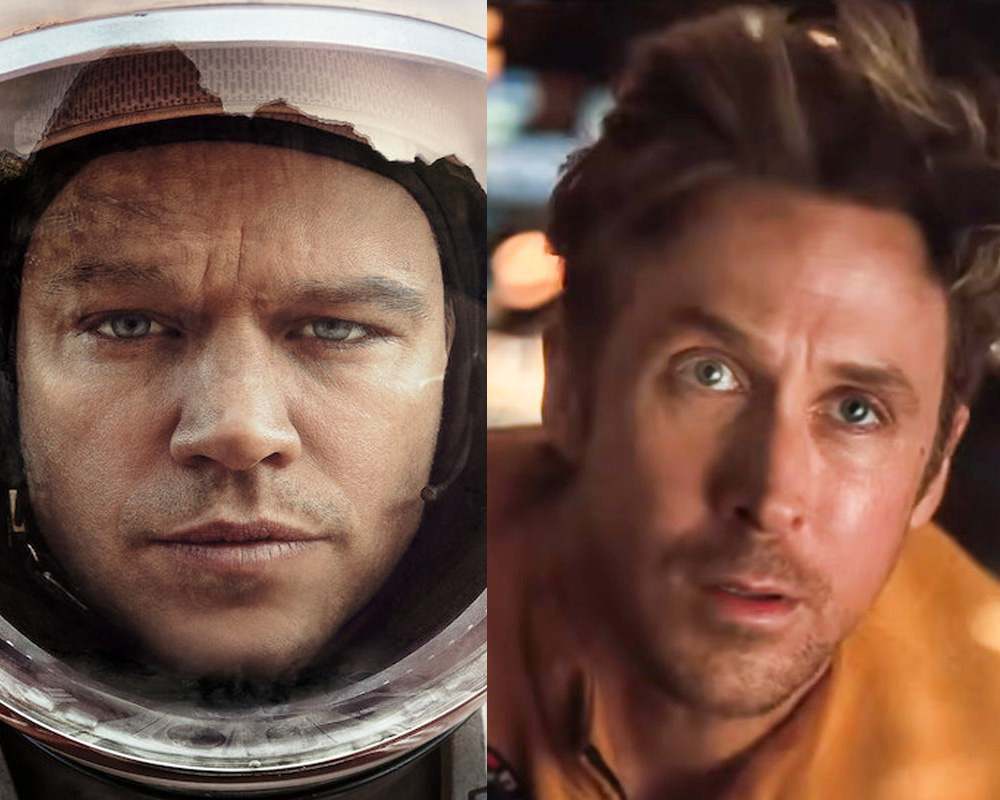
I have seen the film The Martian. And I have read the book Project Hail Mary.
Both are by Andy Weir. Each story centres on a lone human far from Earth, applying science to an impossible situation. But they are built on different storytelling modes.
The Martian is one person against a hostile environment. A traditional Western hero narrative in an interplanetary setting. Project Hail Mary is about humans and non-humans working together across the most extreme differences to save not one world but two. One story is built on the individual. The other is built on the collective.
Before I go any further, I would like to take a look at some numbers. The Martian began as a 99-cent self-published ebook. By 2017, it had sold more than three million copies. The 2015 film grossed $630 million globally against a $108 million budget. Project Hail Mary, published in 2021, has appeared on the New York Times bestseller list for 41 weeks. The film opened in March 2026 to $140.9 million in its first global weekend and has already crossed $573 million worldwide, making it the third-highest-grossing film of 2026. We are still in the early days of the film release, so this number will continue to climb.
The same author tells two stories with different stories about how human beings solve hard problems. Both have connected with a mass audience, making them incredibly popular.
I teach storytelling to people as a practical application to their work. I am particularly drawn to design and innovation contexts, where collaboration and collective intelligence are not nice-to-haves but the engine of how things get done. In those training sessions when I am teaching collaborative forms of storytelling, I have asked this question:
Would Bollywood have made a film like The Martian?

In my previous article, I mentioned Bollywood briefly. The couple who cannot come together without the support of both families. Everyone has a role to play. A fundamentally different understanding of how stories work. I want to go deeper here.
The most beloved films in Bollywood range from the sweeping family epics of the 1970s and 80s to the masala films that blend action, comedy, romance, and social drama into one rollicking good time. Almost always, they are stories about networks of people. Families navigating honour and love across generations. Communities facing injustice together. Enormous casts, sprawling storylines, and resolutions that belong to everyone in the room. Even the dancing, that most iconic of Bollywood signatures, is seldom a solo. The joy is portrayed in large group dance scenes.
Ok, back to the question, one person responded, slowly, “I don’t think so.”
I pushed further, “Can you think of a Bollywood film where one person carries the whole story?”
The room thought. The answer was no.
I ask this question to illustrate how different cultures understand the relationship between the individual and the collective, and how that shapes the stories they choose to tell. Hollywood will make The Martian. Hollywood will make Cast Away, putting Tom Hanks alone on a beach for the majority of a film. This happens because Western narrative tradition has trained us to believe the individual is the story.
Bollywood has a different approach to storytelling.
Which brings me to Project Hail Mary.
I read the novel before the film came out, and I was surprised by it. On the surface, it looks like The Martian. One person, alone, far from home, applying science to an impossible situation. But about a third of the way through, the story changes shape entirely. Ryland Grace is a school teacher turned reluctant astronaut. He wakes up in space with no memory of how he got there, and discovers he is not alone. He meets Rocky, a being from a distant solar system, facing the same crisis Grace was sent to solve. Both of their planets are dying. Neither can fix it without the other.
What follows is an extraordinary portrayal of collaboration and friendship. Grace and Rocky share no language, no biology, no culture, no frame of reference for the world whatsoever. They are completely unlike, except that both value friendship. Together, they solve an extinction-level problem through patience, curiosity, and a willingness to collaborate.
Which brings me to my new workshop question.
Would Bollywood make Project Hail Mary?
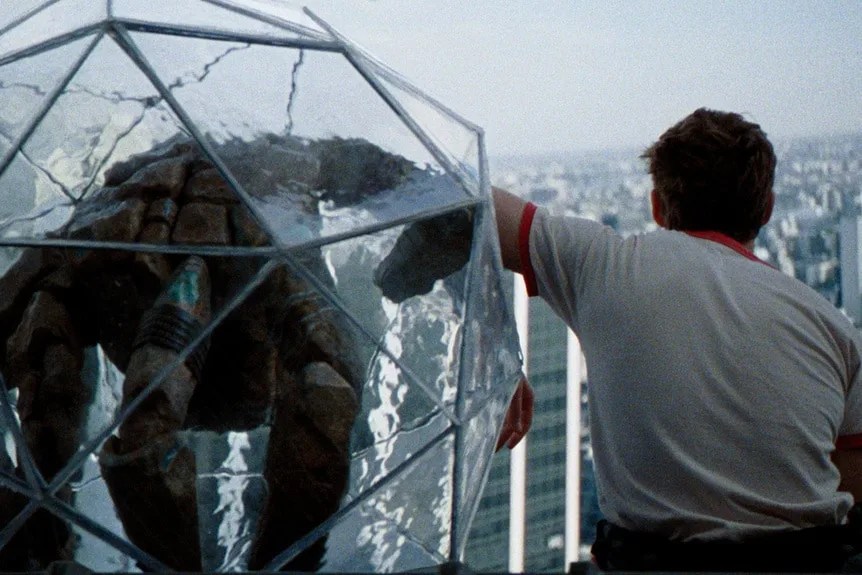
It is a funny question. It is meant to be. But funny questions do the most useful work, because they lower the guard for a breakthrough.
I will not give anything away here, but when I was reading the book, I was surprised by the final decision that Ryland Grace makes in the end. And it filled me with joy!
If you grew up in a storytelling tradition that understands the collective as the natural unit of meaning, would the twist in Project Hail Mary feel the same? Or would it feel like the story is finally becoming what it is supposed to be? Was I surprised by the ending because of my cultural story bias? Or was it something else? I would love you, the reader, to weigh in on this. Contact me here or comment on this post.
The Hail Mary mission itself is a collective act on a planetary scale. Every nation, every institution, every scientific discipline is contributing to a single mission because the alternative is extinction. No competition. No flag-planting. The solution Ryland and Rocky find has to work for both home planets. There is no version of winning that only one of them keeps.
We are living through a moment that has many whole-planet problems on the table. Problems that no single country, company, or brilliant individual can crack on their own. The stories we tell about what good problem-solving looks like have met their moment. They quietly shape who we believe the solver is supposed to be.
The Hero’s Journey tells us to wait for the right person to lead us. Bollywood tells us the story was always going to need more than one person to find a resolution.
When you are designing your next innovation process, strategy session, or team off-site, ask yourself which film you want to be cast in.
The Martian?
Or have you figured out that this particular problem needs a Rocky?
What narrative will work for the problems you are trying to solve?

