Storytelling for Change: Why Every Cause Needs a Villain
Scapegoating in its original form is a purging: an offloading of the community’s sins onto something else, which is expelled along with the guilt. The practice of transferring sins is universal to human experience. Hence the word ‘scapegoat’ hasn’t fallen out of use in 600 years. The question is why? Why do we need someone or something to project our failures or guilt onto? Luckily for me and you, dear reader, there are researchers and scientists who have been asking the same question. What they have found indicates something uncomfortable about which problems we choose to fight, and the ones we think can’t be won. Before I get into the research, let’s look at two major issues affecting humanity right now.

Transforming Work Setbacks into Storytelling Insights

Robert Burns' line, "the best laid plans of mice and men often go awry," encapsulates storytelling's core elements: reversal and reveal. Aristotle’s concepts of peripeteia and anagnorisis aid in processing life’s challenges. Storytelling offers emotional regulation and insight, proving essential for both personal and workplace encounters with adversity.

How to Discover Your Inner Narrator for Business Success

You are the narrator; this is your strategy. I work with clients to help them discover their narrative for business or personal purposes. This means they must become the narrator. It starts with a conversation that explores your story, and I start asking questions

Why Change Communication Fails (And How to Make It Stick)

I was working on a digital transformation project for a large bank. My job was to create the roadshow content and the deck that would go out to employees explaining the change process. I was talking to one of the lead engineers to help me understand the ‘why’. Why this change? What would we gain? What would we lose if the change wasn’t implemented? He didn’t have an answer. He responded, “The CEO just decided. That’s why.”

Conference Organisers Are Storytellers

From the venues, to the speaker curation, to the way sessions are sequenced and the moments designed into the breaks, these aren't logistics decisions. They're narrative decisions. They shape how people experience the event, what they take away, and what they tell others afterwards.

The Story That Never Made It Upstairs

I had to synthesise the findings that needed to reach the executive leadership team. And the authentic communication captured in the last question changed my whole presentation. The biggest key themes and learnings were now framed in their own language.

The Real Story Is Being Told Without the Comms Team

If you are a member of the comms team in government or organisations, you have heard this many times. The decisions have been made, the policy set, the announcement is coming, and the strategic comms plan has been written. The first round of content has been deployed, and this is the first follow-up with the project team. And this is the feedback.

From Stories to Strategy: The Case for Collective Sense Making

Unearth your narrative through collective sense making

Strategic narratives are revealed, not designed. Organisations are made up of people telling stories all day, every day. They are sharing stories of their business, customers, projects, teams and direction. There is much to be learned about an organisation in the language teams use to describe their work, and in the moments they share about…

Am I Good at Telling Stories?

Roughly 80% of our daily communication is some form of storytelling. Not epic novels or keynote speeches. Small moments of your day, fragments of thoughts or anecdotes that illustrate a point of view. We toss around messages embedded in a story in meetings, conversations, and Slack channels. We are telling stories all day, every day, because that is how we understand each other and absorb information. It is how humans are wired.

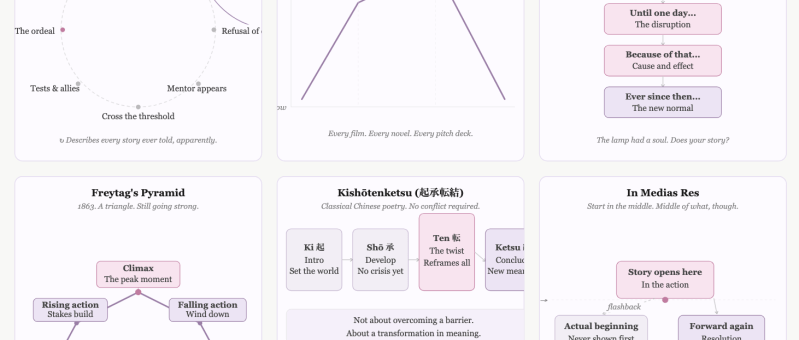
Structure Won’t Save a Story With Nothing to Say

On storytelling frameworks, a Hollywood sequel, and the thing that actually makes stories good. Think of the last movie you saw that made you cry. Or gave you a moment of validation or taught you something new. That moment in the film felt validating and real because a truth resonated with you. Let’s dive into…