
 Written by
Some of the most important storytelling work I’ve done had nothing to do with a keynote or a pitch. It was helping people on work sites share safety messages so that nobody got hurt.
Our workshop focused on creating clear messages and simple stories that would land with people on industrial sites. Here, storytelling is critical. If everyone understands, everyone goes home safely.
The stories came from the participants who were safety experts. One was about a button on a sensor panel that blinked whenever the system needed a reset. Pressing it had become a habit, so when it blinked at the end of one day, everyone assumed it just needed resetting. Nobody checked.
As one person was leaving, they smelled smoke. The sensor had picked up a real fire. They went back in, reset the button, read the sensor panel to find where the fire was, called the fire brigade and worked through the site’s emergency procedures.
The message was simple: never assume. Everyone in the room recognised the power of that message, and that’s why the story landed.
The real power of storytelling doesn’t lie in fast-paced plots and cliffhangers. It lies in being understood.
Storytelling Isn’t Just for the Big Stage
We talk about storytelling as a leadership, business and sales skill. It’s how leaders rally their teams, how founders win over investors and how organisations bring people through change. Storytelling is, and should be, in all of those places.
We also need to be careful. Storytelling is not just for big events like a keynote, town hall or the launch video. Those are moments when we know we’re being told a story; we pay attention.
Good storytelling is subtle. It feels like a seamless, natural part of the day. It doesn’t demand attention. People give it freely, because the story is so clear and relevant to what’s happening.
The In Between Stories
The email in your inbox that’s clear and actionable. You read it once and know exactly what’s happening and what to do.
The Slack post with a meme and two sentences. It takes ten seconds to read, and the ask is obvious. Memes work because they can be funny while pointing at something serious.
A meme about the dreaded “reply all” gets a laugh, and it also reminds everyone to check who’s on the email before they hit send.
Think of one of the many conversations that fill our days. A colleague is stuck on a problem, and their manager says, “You know how you always catch the errors in the final report?” They say yes, and the manager follows with a short story that helps them see in a new way.
Each of these is a story told to reassure, reinforce, convince or move someone. None of them feels like a keynote or a Hollywood film. They’re just another part of your day, and that’s what good storytelling feels like.
Find the Right Story
The goal for any good storyteller is to keep their stories small and accessible. But how do we find these stories? We start with whatever is closest to hand.
Let’s start with defining what a story is. A story is a moment with a message attached. The thing that turns a set of actions into a story is the meaning people take from it.
- Start with something real. Choose something that happened recently. It might be your last conversation, something said in the lunchroom, a client interaction, or last week’s near miss on site.
- Add an emotional cue. Show people how they’re meant to feel about it. Should they laugh, be concerned, relieved or proud? This is where memes, humour or serious words show people why what you’re sharing matters.
- Offer a point of view. Is there something we could try? Is there a way I can help? Is there a next step people might not know about?
- Make the ask. Be clear about why you’re telling this story, and what you want them to do. If they finish reading and still wonder why you told them, the story hasn’t done its job.
Once you have these four things, look for the story that fits them all. It’s usually sitting right in front of you.
Putting it together
Imagine you lead a team that has just moved to a new system for logging client hours, and timesheets are still coming in late.
- Something real. Last month, a client queried an invoice. Because the hours hadn’t been logged properly, it took finance two days to respond.
- An emotional cue. Everyone knows the shoebox of receipts at tax time. You tip out a year of crumpled paper and try to remember what each one was for. It’s stressful, and it’s completely avoidable.
- A point of view. Logging hours in the new system is like filing each receipt in an envelope for its month and writing on it what it was for. It takes seconds at the time, and when a client asks a question, the answer has already been recorded.
- The ask. Before you close your laptop each day, log your hours in the new system.
Here’s how that might look as a quick Slack post:
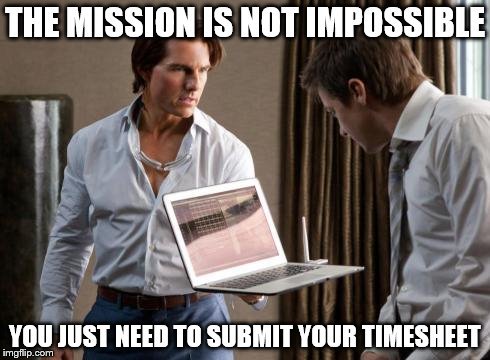
At tax time, there are two kinds of people. We have all heard of the proverbial shoebox of crumpled receipts and with the person trying to remember what each one was for. On the other hand we those with an envelope for every month, with each receipt labelled. The new system makes our timesheets the envelopes. Last month a client queried an invoice with unallocated hours, and it took finance two days to find the information to respond. When we log hours as we go, with the client and task noted, that answer is already there. Before you close your laptop each day, take thirty seconds to log your hours.
It takes ten seconds to read. People recognise the moment, they know how to feel about it, and they know exactly what to do.
Notice where the story sits. The shoebox is just a box of paper until it carries a message. Here, it stands for the stress of leaving things to the last minute, and that is what makes the ask stick.
Small moments, real power
Delivered well, the story slips into someone’s day. They understand it, and they move on, getting their work done.
That isn’t a lesser form of storytelling. It’s the most powerful kind. Storytelling matters in leadership, sales and everyday work because, at its heart, it’s the skill of being understood.
Next time you need to get a message across, look for the small story, the one from your day.
Here’s a small challenge for this week. Pick one message you need to send and run it through the four steps: start with something real, add an emotional cue, offer your point of view and make the ask. Then notice how people respond.

